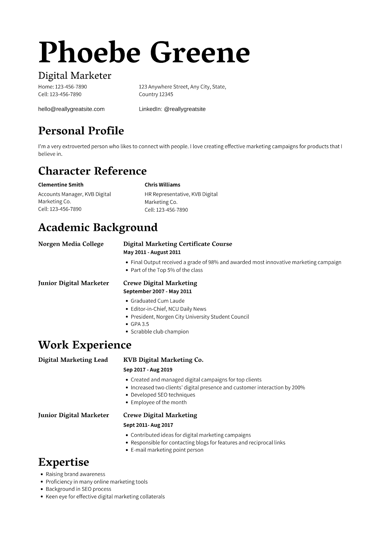
How to Create an Outstanding Resume Without Work Experience
There’s no doubt that work experience counts a lot when you’re looking for a job, especially when...


The life sciences industry is evolving fast and 2026 will only accelerate that pace. From automation and AI adoption to a manufacturing rebound and ongoing funding pressures, the way labs hire and retain talent is changing just as quickly as the science itself. The new year will demand a smarter, faster approach to building lab teams that can adapt as innovation accelerates.
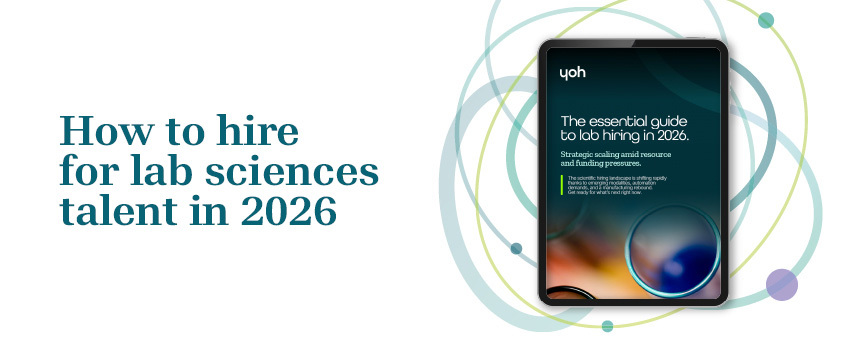
For many organizations, that means balancing two competing realities: the need to innovate faster and the need to do it with leaner, more agile teams. Yoh’s essential guide to lab hiring in 2026 dives into this new dynamic, equipping hiring managers and scientific leaders with the insights they need to adapt and scale strategically in the year ahead.
In 2026, the pressure to do more with less will intensify. Labs are facing longer hiring cycles, skill shortages in specialized roles, and growing competition for qualified candidates across established hubs like Boston, San Diego, and the Bay Area.
At the same time, automation and AI are reshaping what “lab work” even means. Many positions that once required manual precision are evolving into data-driven, hybrid roles that merge analytical, technical, and scientific skill sets.
The guide explores how this evolution is reshaping workforce models and candidate expectations - and how leading labs are adapting their hiring playbooks to stay ahead.
Behind the scenes, several powerful market forces are converging to redefine how labs operate and staff their teams:
New breakthroughs in cell and gene therapy, diagnostics, and personalized medicine are reshaping workforce needs. As demand for advanced modalities grows, so does the need for professionals who understand complex molecular systems, digital tools, and cross-functional collaboration.
Robotics and intelligent systems are quickly becoming essential in the modern lab. AI isn’t just speeding up processes—it’s changing which roles are essential, creating new opportunities in lab automation, computational biology, and data analytics powered by AI.
The return of biomanufacturing to U.S. soil and the expansion of regional biotech ecosystems are driving local demand for technical and quality control roles. Growth markets like Salt Lake City, Philadelphia, and the Midwest are becoming strong alternatives to traditional coastal hubs.
Even as innovation accelerates, funding constraints are forcing many labs to rethink how they staff projects. More are turning to flexible models—mixing contract, project-based, and direct-hire roles—to maintain momentum without overspending.
The guide also takes a realistic look at what will continue to challenge scientific hiring in 2026.
Even with new grads entering the field and automation taking on more routine tasks, talent gaps in specialized areas—from AI and data science to quality and compliance—will remain significant.
At the same time, heightened competition from startups, CDMOs, and venture-backed biotech firms will make attracting and retaining top performers even harder. Labs that wait too long to fill critical roles risk slowing down research or losing hard-won progress altogether.
The takeaway? Hiring speed and workforce flexibility will be just as critical to success as technical expertise.
With more than 80 years in STEM staffing, Yoh brings deep industry knowledge and recruiting precision to help life sciences organizations build high-performing teams, fast. Yoh’s recruiters speak the language of science, understand lab environments firsthand, and know how to identify the right talent mix for every stage of growth.
From biotech startups to global pharmaceutical leaders, Yoh helps labs navigate workforce challenges with the flexibility, compliance, and speed today’s market demands.
The year ahead will reward labs that can adapt quickly, act strategically, and hire intelligently.
Building future-ready teams isn’t just about filling roles; it’s about anticipating what’s next.
Yoh’s Essential Guide to Lab Hiring in 2026 will help you do just that—spot early signals, refine hiring strategies, and position your lab to thrive amid rapid industry transformation.


%20Size%20Photos/GettyImages-1404470276.jpg?width=382&name=GettyImages-1404470276.jpg)